Gothic architecture is overwhelming and extravagant, giving visitors or simply onlookers the feeling of extreme emotion and terror with mystery and darkness, this is like the sublime of enjoying the fear and terror people feel when watching horror movies. Gothic architecture is mostly linked with cathedrals, churches and castles and features include arches, towers, sharp edges, elaborate staircases, carvings and intense attention to detail such as stained glass windows and statues of angels and gargoyles . An example of fine Gothic architecture is Canterbury cathedral, pictured below showing some of the features and details I have described above.
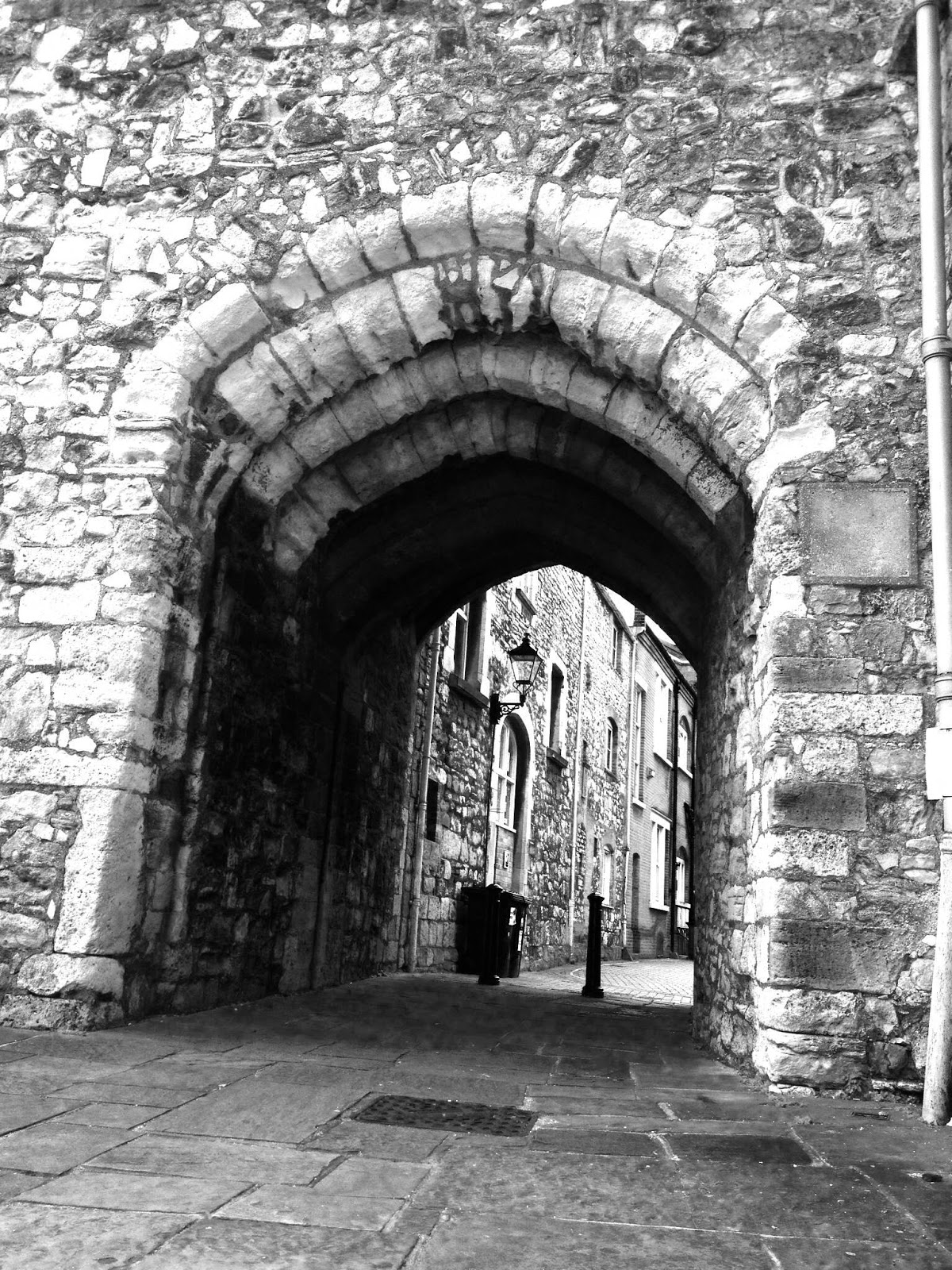
Whilst living in Southampton over the past five months I have noticed that there is a lot of historical, old, decaying buildings and architecture with a Gothic feel. Although these aren't Gothic places they have aspects and elements that remind me of the Gothic and by taking photos from certain angles and turning them black and white this really enhances the overall vibe I was going for. When learning about the Gothic and architecture these three locations came to mind so I thought I would share some of my favourites from my little adventure.
References:
http://www.canterburycathedrallodge.org/UserFiles/Image/Canterbury%20Christmas%20low%20res%20web.jpg
http://www.familyholiday.net/wp-content/uploads/2011/04/inside-canterbury-cathedral.jpg
Tuesday, 10 February 2015
Monday, 2 February 2015
Looking into Miss Havisham & TV and film portrayals
"She was dressed in rich materials- satins, and lace, and silks- all of
white. And she had a long white veil dependent from her hair, and she
had bridal flowers in her hair, but her hair was white. Some bright
jewels sparkled on her neck and on her hands, and some other jewels lay
sparkling on the table...She had not quite finished dressing, for she
had but one shoe on..."
I made this mindmap on Miss Havisham to help analyse her character from her past, the key thing that sent her off the rails of normality, traits of her character and what happens throughout the story.
What I have learnt about Miss Havisham is that she came from a wealthy family and when she was younger her mother died and her father remarried which resulted in him having a son who did not like Miss Havisham. Miss Havisham met a man who she was madly in love with and they got engaged, she didn't know he was a conman who worked together with her step brother to plot to steal her fortune and desert her on her wedding day. This left Miss Havisham so distraught and heart broken that she stops all the clocks in her house (Satis House) and becomes a male-hating, bitter recluse and never removed her wedding gown and remains wearing the one shoe she had on at the time she found out she had been betrayed. Even the room with the table laid for her wedding, featuring an extravagant wedding cake (albeit mouldy and disgusting) remained the same forever. She adopted Estella as a little girl and raised her to be a weapon against all men, raising her to have no heart and normal human emotions, Miss Havisham wanted Estella to break hearts just like how she was treated. This is why she invited Pip over as a little boy to play with Estella, even though Estella bullied and mistreated him. She pushed Pip into falling in love with Estella and under her spell, just to see him get his heart broken.
I decided to look at how Miss Havisham had been portrayed by different actresses since the beginning of TV and film to compare the differences in appearance and age and overall effect as I have only seen her acted by Gillian Anderson (2011 BBC 3 part mini series) and by Helena Bonham Carter.
Florence Reed 1934:
This was the first sound version of Charles Dickens Great Expectation's and was made by Stuart Walker in Hollywood's Universal Studios with mainly an American cast. This was much less popular than the 1946 version and doesn't follow the true story of Great Expectation's, for example Miss Havisham doesn't wear the wedding gown we expect to see from reading the novel and doesn't wear her veil at all times. From the images I have seen I don't think she looks like she is playing Miss Havishams character. It didn't appear that she really organised and plans Pips heartbreak by Estella and ended up dying off-screen from natural causes. I feel like people would have been disappointment because Miss Havishams plan from the moment she got Estella was to bring her up to break hearts and that is why Pip came to meet both Havisham and Estella in the first place. When Miss Havisham burnt to death after apologising to Pip and repenting for all that she had done this had a symbolic meaning as being consumed by a fire is the Christian image of cleansing as well as punishment for sin. To cut these two key events would completely ruin the story for me personally.
Martita Hunt 1946:
This 1946 version was made by David McClean in Britain and won two Academy Awards in Best Art Direction and Best Cinematography and was nominated for Best Picture, Best Director and Best Screenplay. It was the first British film to win an Oscar for its cinematography. It was named by many commentators one of the finest films yet made of a Dickens novel and came third as the most popular film at the British Box Office 1947. I feel like the make-up, hair and costume is much more accurate to Dickens character Miss Havisham than the 1934 version as her outfit is very extravagant, like an old wedding dress and she has a ghostly, unstable and slightly mad look.
Margaret Leighton 1974:
The 1974 adaptation of Great Expectations starred Margaret Leighton as Miss Havisham and Sarah Miles who played both young and older Estella. It was directed by Joseph Hardy and made as a film for television and was entered into the 9th Moscow International Film Festival in 1975. I think Margaret Leighton really looks the part for her Miss Havisham character as she is wearing the white wedding dress and veil with the glittering jewellery around her neck. Her skin is very pale and she appears very tired. However I think her dress looks too white and fresh to be the Havisham that is rotting away in Satis house, I think more subtle make-up and more off-white and moth eaten looking dress would be more effective. I believe her overall look in this film would be much better suited to the theatre stage than a TV series or film as it doesn't look realistic enough to me.
Joan Hickson 1981:
Joan Hickson played Miss Havisham in the 1981 BBC TV mini-series directed by Julian Amyes. Joan Hickson was an English actress best known for her role in Agatha Christies Miss Marple in the TV series Miss Marple. As well as acting the character on TV, she also narrated Miss Marple stories for audio books. Because of this I can only see her as her Miss Marple character instead of as Miss Havisham. I really like her look in this as I feel like its quite accurate to the period its set in, she looks like a very wealthy dowager. The make-up isn't too over the top in the paleness and aging and the hair looks how I believe the Victorians in the earlier part of the era would have worn there hair with the center parting and short curls. The dress is very detailed and fancy with ruffles and sparkles galore. I almost think she looks too normal to be a Miss Havisham though, in my opinion I would like to see her looking more withered and pale, she doesn't look like she has neglected herself as much as I believe Havisham did.
Jean Simmons 1989:
This 6-part series was first aired on ITV in 1991 however was released on video in America in 1989. Jean Simmons who played the role of Estella in the 1946 version played Miss Havisham this time round which means she knew the tale like the back of her hand and had a passion for the novel. From the images of her I have seen it appears as though aging make-up techniques have been used and the curls don't look like the traditional Victorian style we expect, more like her hair has been abandoned for a very long time so that it no longer resembles the hair style she may once have had on her wedding day. This series stretched across 5 hours and this meant that much more detail from the original novel could be included in this adaptation and more concentration could be put into the characters roles within the story.
Anne Bancroft 1998:
Anne Bancroft starred in the 1998 contemporary adaptation of Great Expectations alongside Gwyneth Paltrow as Estella, directed by Alfonso Cuaron set in 1990's New York. The character we know as Pip had been changed to Finn, and Miss Havisham to Nora Dinsmoor. This film received mixed reviews as some said it was too different to the beloved novel by Charles Dickens, I can see why people would think this as just by looking at the photographs of the Havisham or 'Dinsmoor' character, she resembles nothing to the character we think of when referring to the original tale. She is not wearing a wedding gown, or a veil, or have any resemblance to a bitter, heartbroken, Victorian era dowager and appears more as a drag queen because of her emerald green gown, red nails, bright blonde dramatically flicked hair and bold make-up that matches the rest of her look. She appears to be a bizarre and over-the-top in both looks and personality, not the conventional Miss Havisham.
Charlotte Rampling 1999:
My first reaction to this image of Charlotte Rampling as Miss Havisham is that apart from not looking as withered, neglected and aged as some of the other portrayals, I really like the dress, accessories and hairstyle that has been given to this character. I think with a less fancy overall appearance this portrayal could be once of my favourites. If I was the hair and make-up designer I would have styled the hair a bit down giving it a more of an ignored effect and the face a bit more age and some dark circles to represent poor nourishment, lack of sleep and deterioration. I would also make the costume look more old and worn out, like it had never been washed or taken off. This television film was directed by Julian Jarrold and was filmed at the number of Kent locations, which made it more authentic as parts of the original Dickens novel that weren't set in London were set in Kent. It won the BAFTA TV Award for Best Costume Design, Best Design and Best Make-up and Hair in 2000 and the 1999 RTS Television Award for Best Sound in Drama, Best Production in Drama, Best Lighting and Photography and Camera.
http://en.wikipedia.org/wiki/Miss_Havisham#In_film_and_television
http://en.wikipedia.org/wiki/Great_Expectations_%281934_film%29
http://i.telegraph.co.uk/multimedia/archive/02063/Florence-Reed3_2063022i.jpg
http://en.wikipedia.org/wiki/Great_Expectations_%281946_film%29
http://www.thecityreview.com/greatex2.jpg
http://en.wikipedia.org/wiki/Great_Expectations_%281974_film%29
http://i.telegraph.co.uk/multimedia/archive/02062/Margaret-Leighton_2062993i.jpg
http://en.wikipedia.org/wiki/Great_Expectations_%281981_TV_serial%29
http://i.telegraph.co.uk/multimedia/archive/02062/Joan-Hickson_2062998i.jpg
http://en.wikipedia.org/wiki/Great_Expectations_%28miniseries%29
http://en.wikipedia.org/wiki/Jean_Simmons
http://i.telegraph.co.uk/multimedia/archive/02062/Joan-Simmons_2062995i.jpg
http://www.gothic.stir.ac.uk/wp-content/uploads/2011/11/bancroft.jpg
http://en.wikipedia.org/wiki/Great_Expectations_%281998_film%29
http://i.telegraph.co.uk/multimedia/archive/02063/Charlotte-Rampling_2063036i.jpg
http://en.wikipedia.org/wiki/Great_Expectations_%281999_film%29
http://www.imdb.com/title/tt0167187/
I made this mindmap on Miss Havisham to help analyse her character from her past, the key thing that sent her off the rails of normality, traits of her character and what happens throughout the story.
What I have learnt about Miss Havisham is that she came from a wealthy family and when she was younger her mother died and her father remarried which resulted in him having a son who did not like Miss Havisham. Miss Havisham met a man who she was madly in love with and they got engaged, she didn't know he was a conman who worked together with her step brother to plot to steal her fortune and desert her on her wedding day. This left Miss Havisham so distraught and heart broken that she stops all the clocks in her house (Satis House) and becomes a male-hating, bitter recluse and never removed her wedding gown and remains wearing the one shoe she had on at the time she found out she had been betrayed. Even the room with the table laid for her wedding, featuring an extravagant wedding cake (albeit mouldy and disgusting) remained the same forever. She adopted Estella as a little girl and raised her to be a weapon against all men, raising her to have no heart and normal human emotions, Miss Havisham wanted Estella to break hearts just like how she was treated. This is why she invited Pip over as a little boy to play with Estella, even though Estella bullied and mistreated him. She pushed Pip into falling in love with Estella and under her spell, just to see him get his heart broken.
I decided to look at how Miss Havisham had been portrayed by different actresses since the beginning of TV and film to compare the differences in appearance and age and overall effect as I have only seen her acted by Gillian Anderson (2011 BBC 3 part mini series) and by Helena Bonham Carter.
Florence Reed 1934:
This was the first sound version of Charles Dickens Great Expectation's and was made by Stuart Walker in Hollywood's Universal Studios with mainly an American cast. This was much less popular than the 1946 version and doesn't follow the true story of Great Expectation's, for example Miss Havisham doesn't wear the wedding gown we expect to see from reading the novel and doesn't wear her veil at all times. From the images I have seen I don't think she looks like she is playing Miss Havishams character. It didn't appear that she really organised and plans Pips heartbreak by Estella and ended up dying off-screen from natural causes. I feel like people would have been disappointment because Miss Havishams plan from the moment she got Estella was to bring her up to break hearts and that is why Pip came to meet both Havisham and Estella in the first place. When Miss Havisham burnt to death after apologising to Pip and repenting for all that she had done this had a symbolic meaning as being consumed by a fire is the Christian image of cleansing as well as punishment for sin. To cut these two key events would completely ruin the story for me personally.
Martita Hunt 1946:
This 1946 version was made by David McClean in Britain and won two Academy Awards in Best Art Direction and Best Cinematography and was nominated for Best Picture, Best Director and Best Screenplay. It was the first British film to win an Oscar for its cinematography. It was named by many commentators one of the finest films yet made of a Dickens novel and came third as the most popular film at the British Box Office 1947. I feel like the make-up, hair and costume is much more accurate to Dickens character Miss Havisham than the 1934 version as her outfit is very extravagant, like an old wedding dress and she has a ghostly, unstable and slightly mad look.
Margaret Leighton 1974:
The 1974 adaptation of Great Expectations starred Margaret Leighton as Miss Havisham and Sarah Miles who played both young and older Estella. It was directed by Joseph Hardy and made as a film for television and was entered into the 9th Moscow International Film Festival in 1975. I think Margaret Leighton really looks the part for her Miss Havisham character as she is wearing the white wedding dress and veil with the glittering jewellery around her neck. Her skin is very pale and she appears very tired. However I think her dress looks too white and fresh to be the Havisham that is rotting away in Satis house, I think more subtle make-up and more off-white and moth eaten looking dress would be more effective. I believe her overall look in this film would be much better suited to the theatre stage than a TV series or film as it doesn't look realistic enough to me.
Joan Hickson 1981:
Joan Hickson played Miss Havisham in the 1981 BBC TV mini-series directed by Julian Amyes. Joan Hickson was an English actress best known for her role in Agatha Christies Miss Marple in the TV series Miss Marple. As well as acting the character on TV, she also narrated Miss Marple stories for audio books. Because of this I can only see her as her Miss Marple character instead of as Miss Havisham. I really like her look in this as I feel like its quite accurate to the period its set in, she looks like a very wealthy dowager. The make-up isn't too over the top in the paleness and aging and the hair looks how I believe the Victorians in the earlier part of the era would have worn there hair with the center parting and short curls. The dress is very detailed and fancy with ruffles and sparkles galore. I almost think she looks too normal to be a Miss Havisham though, in my opinion I would like to see her looking more withered and pale, she doesn't look like she has neglected herself as much as I believe Havisham did.
Jean Simmons 1989:
This 6-part series was first aired on ITV in 1991 however was released on video in America in 1989. Jean Simmons who played the role of Estella in the 1946 version played Miss Havisham this time round which means she knew the tale like the back of her hand and had a passion for the novel. From the images of her I have seen it appears as though aging make-up techniques have been used and the curls don't look like the traditional Victorian style we expect, more like her hair has been abandoned for a very long time so that it no longer resembles the hair style she may once have had on her wedding day. This series stretched across 5 hours and this meant that much more detail from the original novel could be included in this adaptation and more concentration could be put into the characters roles within the story.
Anne Bancroft 1998:
Anne Bancroft starred in the 1998 contemporary adaptation of Great Expectations alongside Gwyneth Paltrow as Estella, directed by Alfonso Cuaron set in 1990's New York. The character we know as Pip had been changed to Finn, and Miss Havisham to Nora Dinsmoor. This film received mixed reviews as some said it was too different to the beloved novel by Charles Dickens, I can see why people would think this as just by looking at the photographs of the Havisham or 'Dinsmoor' character, she resembles nothing to the character we think of when referring to the original tale. She is not wearing a wedding gown, or a veil, or have any resemblance to a bitter, heartbroken, Victorian era dowager and appears more as a drag queen because of her emerald green gown, red nails, bright blonde dramatically flicked hair and bold make-up that matches the rest of her look. She appears to be a bizarre and over-the-top in both looks and personality, not the conventional Miss Havisham.
Charlotte Rampling 1999:
My first reaction to this image of Charlotte Rampling as Miss Havisham is that apart from not looking as withered, neglected and aged as some of the other portrayals, I really like the dress, accessories and hairstyle that has been given to this character. I think with a less fancy overall appearance this portrayal could be once of my favourites. If I was the hair and make-up designer I would have styled the hair a bit down giving it a more of an ignored effect and the face a bit more age and some dark circles to represent poor nourishment, lack of sleep and deterioration. I would also make the costume look more old and worn out, like it had never been washed or taken off. This television film was directed by Julian Jarrold and was filmed at the number of Kent locations, which made it more authentic as parts of the original Dickens novel that weren't set in London were set in Kent. It won the BAFTA TV Award for Best Costume Design, Best Design and Best Make-up and Hair in 2000 and the 1999 RTS Television Award for Best Sound in Drama, Best Production in Drama, Best Lighting and Photography and Camera.
http://en.wikipedia.org/wiki/Miss_Havisham#In_film_and_television
http://en.wikipedia.org/wiki/Great_Expectations_%281934_film%29
http://i.telegraph.co.uk/multimedia/archive/02063/Florence-Reed3_2063022i.jpg
http://en.wikipedia.org/wiki/Great_Expectations_%281946_film%29
http://www.thecityreview.com/greatex2.jpg
http://en.wikipedia.org/wiki/Great_Expectations_%281974_film%29
http://i.telegraph.co.uk/multimedia/archive/02062/Margaret-Leighton_2062993i.jpg
http://en.wikipedia.org/wiki/Great_Expectations_%281981_TV_serial%29
http://i.telegraph.co.uk/multimedia/archive/02062/Joan-Hickson_2062998i.jpg
http://en.wikipedia.org/wiki/Great_Expectations_%28miniseries%29
http://en.wikipedia.org/wiki/Jean_Simmons
http://i.telegraph.co.uk/multimedia/archive/02062/Joan-Simmons_2062995i.jpg
http://www.gothic.stir.ac.uk/wp-content/uploads/2011/11/bancroft.jpg
http://en.wikipedia.org/wiki/Great_Expectations_%281998_film%29
http://i.telegraph.co.uk/multimedia/archive/02063/Charlotte-Rampling_2063036i.jpg
http://en.wikipedia.org/wiki/Great_Expectations_%281999_film%29
http://www.imdb.com/title/tt0167187/
Great Expectations - BBC 2011 3-part mini series VS 2012 Mike Newell film
Having never studied Great Expectations or read it before, I had no idea really of what to expect or what it was even about, all I knew about it was that there was a character called Miss Havisham who was a crazy old woman who was jilted on her wedding day. My friend told me the BBC had made a 3 part mini series in 2011 which I would really enjoy and that didn't miss out any parts of the book, so I found it on Netflix. I also decided to watch the 2012 film as I think Helena Bonham-Carter is an amazing actress and thought she would suit the role of Miss Havisham perfectly. This way I could compare the way the story is told and how all the characters are portrayed in each version.
BBC Version:
I really loved the BBC adaptation and Miss Havisham was exactly what I expected and wanted her to be. I loved the way the story was told and I found it quite easy to follow. As it was 3 hours long it could go into more detail which helped someone who hadn't read it before watching it understand what was going on, this is what I was worried about at first! At the beginning of the show Pip was a young boy and by the end he was a grown up young man which gives the viewers the feeling that they have watched him grow up, helping you to feel more attached to them and makes their character overall more relatable. Gillian Anderson portrayed Miss Havisham as a nervous, timid, quiet and completely damaged by her past, even the mannerisms like the scratching of her own skin made the whole act so believable and perfect. She also appeared as though she was unwell and doesn't eat very often at all and the make-up and hair portrayed this very well, she was really pale with scabby lips and looked like she hadn't slept or seen sunlight in a long time. I also really liked how as her mental state deteriorated towards the end of her life so did he appearance even more, she was wounded and scabby from her nervous scratching, her curls were falling outm, she looked unhealthier than ever. The characters in this version of Great Expectations were much more authentically portrayed and I felt as a viewer like I had more of a connection with them than I had when watching the 2012 movie. The costume, make-up and hair in the BBC version was more realistic in my opinion to the time which helped make the show seem more real and truthful. I also believe that Satis House was a much better location as it wasn't too over the top whilst still having the haunted, ghostly, cold, derelict, unloved and abandoned feel that it needs.
In my opinion the 2012 movie wasn't haunting enough and Helena Bonham-Carter played too much of a psychotic and mental Miss Havisham rather than the fragile, deeply broken hearted, mentally scarred and wounded character I wanted her to be. To me she seemed to have been too deliberately scheming and manipulative with her plans where as I think Gillian Anderson played her part more anxiously and didn't really seem to know 100% what she was trying to do by bringing Estella up just to ruin her and seemed genuinely apologetic for the pain and hurt she had caused Pip at the end of the film just before her death. Overall I believe while both productions being amazing that the BBC adaptation was more true in my opinion to the original tale, creating a more emotional and captivating watch.
Here is an interview with Gillian Anderson about her role as Miss Havisham:
2012 Mike Newell film:
Interview with Helena Bonham Carter on her role as Miss Havisham:
References:
https://blogger.googleusercontent.com/img/b/R29vZ2xl/AVvXsEj-5CUiEfqPz0uOzdIWoGA8w38AQzSAvafdsXtC-LIeEaObEcCIqtRuW3PbBg60SJg2_KMkTnzJaAiqDtT-TVCDetxLtmk_bQA4z2coggi9YBcL_jM4PmAI8HsPMr9KfTftn9ZD5vYs8Ys/s1600/BBC_Pip.jpg
http://i.dailymail.co.uk/i/pix/2011/11/22/article-2064629-0EE62E3D00000578-181_306x528.jpg
http://i.telegraph.co.uk/multimedia/archive/02063/Gilian-Anderson5_2063010i.jpg
https://austenprose.files.wordpress.com/2012/04/douglas-booth-as-pip-in-great-expectations-2012-x-450.jpg
http://www.nailandrockett.com/IMAGES/blog/Great%20Expectations%20blog/slide%20show%20blog/Estella%20navy%20top%20half%20400.jpg
https://blogger.googleusercontent.com/img/b/R29vZ2xl/AVvXsEj6PjhuM4tSYFpIExdOBYO3_d6-xJykvq2TEyy8n-nRdSYJdAfUOhMrsFEeotF9PkZ-VFX0CUm2p8nmvMysnu13Oghc5GuKHizqmD96crP1pDezhIcQBwP_SEkW5r4FZPBkLhXxT7iDygnk/s1600/helena-bonham-carter-miss-havisham-great-expectations-01.jpg
https://www.youtube.com/watch?v=a1RbnX552g4
https://www.youtube.com/watch?v=As6mA6iabAc
BBC Version:
I really loved the BBC adaptation and Miss Havisham was exactly what I expected and wanted her to be. I loved the way the story was told and I found it quite easy to follow. As it was 3 hours long it could go into more detail which helped someone who hadn't read it before watching it understand what was going on, this is what I was worried about at first! At the beginning of the show Pip was a young boy and by the end he was a grown up young man which gives the viewers the feeling that they have watched him grow up, helping you to feel more attached to them and makes their character overall more relatable. Gillian Anderson portrayed Miss Havisham as a nervous, timid, quiet and completely damaged by her past, even the mannerisms like the scratching of her own skin made the whole act so believable and perfect. She also appeared as though she was unwell and doesn't eat very often at all and the make-up and hair portrayed this very well, she was really pale with scabby lips and looked like she hadn't slept or seen sunlight in a long time. I also really liked how as her mental state deteriorated towards the end of her life so did he appearance even more, she was wounded and scabby from her nervous scratching, her curls were falling outm, she looked unhealthier than ever. The characters in this version of Great Expectations were much more authentically portrayed and I felt as a viewer like I had more of a connection with them than I had when watching the 2012 movie. The costume, make-up and hair in the BBC version was more realistic in my opinion to the time which helped make the show seem more real and truthful. I also believe that Satis House was a much better location as it wasn't too over the top whilst still having the haunted, ghostly, cold, derelict, unloved and abandoned feel that it needs.
In my opinion the 2012 movie wasn't haunting enough and Helena Bonham-Carter played too much of a psychotic and mental Miss Havisham rather than the fragile, deeply broken hearted, mentally scarred and wounded character I wanted her to be. To me she seemed to have been too deliberately scheming and manipulative with her plans where as I think Gillian Anderson played her part more anxiously and didn't really seem to know 100% what she was trying to do by bringing Estella up just to ruin her and seemed genuinely apologetic for the pain and hurt she had caused Pip at the end of the film just before her death. Overall I believe while both productions being amazing that the BBC adaptation was more true in my opinion to the original tale, creating a more emotional and captivating watch.
Here is an interview with Gillian Anderson about her role as Miss Havisham:
2012 Mike Newell film:
Interview with Helena Bonham Carter on her role as Miss Havisham:
References:
https://blogger.googleusercontent.com/img/b/R29vZ2xl/AVvXsEj-5CUiEfqPz0uOzdIWoGA8w38AQzSAvafdsXtC-LIeEaObEcCIqtRuW3PbBg60SJg2_KMkTnzJaAiqDtT-TVCDetxLtmk_bQA4z2coggi9YBcL_jM4PmAI8HsPMr9KfTftn9ZD5vYs8Ys/s1600/BBC_Pip.jpg
http://i.dailymail.co.uk/i/pix/2011/11/22/article-2064629-0EE62E3D00000578-181_306x528.jpg
http://i.telegraph.co.uk/multimedia/archive/02063/Gilian-Anderson5_2063010i.jpg
https://austenprose.files.wordpress.com/2012/04/douglas-booth-as-pip-in-great-expectations-2012-x-450.jpg
http://www.nailandrockett.com/IMAGES/blog/Great%20Expectations%20blog/slide%20show%20blog/Estella%20navy%20top%20half%20400.jpg
https://blogger.googleusercontent.com/img/b/R29vZ2xl/AVvXsEj6PjhuM4tSYFpIExdOBYO3_d6-xJykvq2TEyy8n-nRdSYJdAfUOhMrsFEeotF9PkZ-VFX0CUm2p8nmvMysnu13Oghc5GuKHizqmD96crP1pDezhIcQBwP_SEkW5r4FZPBkLhXxT7iDygnk/s1600/helena-bonham-carter-miss-havisham-great-expectations-01.jpg
https://www.youtube.com/watch?v=a1RbnX552g4
https://www.youtube.com/watch?v=As6mA6iabAc
The Gothic
Gothic horror as a genre of literature explores the themes of eery horror with romance and gothic authors find interesting ways to express contemporary fears by using time, locations, situations and including characters that the readers can relate to. All these themes and elements makes it exciting and captivating for the reader.
The genre is thought to have been begun by Horace Walpole, an English author when he wrote 'The Castle of Otranto' in 1764. This novel was inspired by a dream he had in his beautiful gothic home Strawberry Hill House in which a gigantic armoured fist on his staircase. The Castle of Otranto inspired novels such as Mary Shelley's Frankenstein and Bram Stokers Dracula (the endless list goes on).
Walpole used wild, remote and exotic landscapes to very uncomfortable and imprisoning locations as settings for his stories
Gothic novels include monsters, vampires, ghosts, werewolves, the Devil and characters that have a dominating and supernatural feeling presense, these creatures give the readers the fear and thrill that is sought after by Gothic Horror fans. There is also the helpless, scared victim who is forced into situations they may not want to be in; for example how Pip from Great Expectations felt when he was first ordered to go to play with Estella at Satis House under the demand of Miss Havisham and how Havisham manipulated both Estella and Pip into doing different things, in this case it was Estella breaking Pips heart and setting Pip up to fall in love with her.
Gothic novels include contemporary fears such as poverty, sickness, class and death to really connect with the reader.
Key motifs in Gothic novels:
- Strange places
- Clashing time periods
- Power & constraint
- A world of doubt
- Terror vs. horror
- Sexual power
- The uncanny
- The sublime
- Crisis
- The supernatural and real
When I think about the term 'Gothic' I think about old, haunted houses and castles, ghosts, a place with a bad atmosphere and where dark things have happened, black and white, bad intentions, suffering, coldness, dirt, decay, Gothic architecture and an overall feeling of being very uncomfortable.
References:
http://www.strawberryhillhouse.org.uk/horace-walpole.php
http://www.bl.uk/romantics-and-victorians/themes/the-gothic
http://www.bl.uk/romantics-and-victorians/articles/gothic-motifs
The genre is thought to have been begun by Horace Walpole, an English author when he wrote 'The Castle of Otranto' in 1764. This novel was inspired by a dream he had in his beautiful gothic home Strawberry Hill House in which a gigantic armoured fist on his staircase. The Castle of Otranto inspired novels such as Mary Shelley's Frankenstein and Bram Stokers Dracula (the endless list goes on).
Walpole used wild, remote and exotic landscapes to very uncomfortable and imprisoning locations as settings for his stories
Gothic novels include monsters, vampires, ghosts, werewolves, the Devil and characters that have a dominating and supernatural feeling presense, these creatures give the readers the fear and thrill that is sought after by Gothic Horror fans. There is also the helpless, scared victim who is forced into situations they may not want to be in; for example how Pip from Great Expectations felt when he was first ordered to go to play with Estella at Satis House under the demand of Miss Havisham and how Havisham manipulated both Estella and Pip into doing different things, in this case it was Estella breaking Pips heart and setting Pip up to fall in love with her.
Gothic novels include contemporary fears such as poverty, sickness, class and death to really connect with the reader.
Key motifs in Gothic novels:
- Strange places
- Clashing time periods
- Power & constraint
- A world of doubt
- Terror vs. horror
- Sexual power
- The uncanny
- The sublime
- Crisis
- The supernatural and real
When I think about the term 'Gothic' I think about old, haunted houses and castles, ghosts, a place with a bad atmosphere and where dark things have happened, black and white, bad intentions, suffering, coldness, dirt, decay, Gothic architecture and an overall feeling of being very uncomfortable.
References:
http://www.strawberryhillhouse.org.uk/horace-walpole.php
http://www.bl.uk/romantics-and-victorians/themes/the-gothic
http://www.bl.uk/romantics-and-victorians/articles/gothic-motifs
Saturday, 31 January 2015
Early Victorian hairstyle practicals
Here are
pictures of my practise in the lesson of two different basic early Victorian
hair styles followed by a photo of a go I had at home on my flat mates
hair. I was happy with the turn out of the style on my flat mate as it was much easier to work with than on our dolly heads hair. I found during practising these styles that the bit I most struggled with was creating a straight center parting and the smoothing of putting the hair into a ponytail and bun without it being messy.
Equipment:
- Hair brush
- Tail comb
- Grips and pins
- Section clips
- A small hair band
- Small curling wand
- Dolly head/model
1) Create a center parting with the tail comb and on each side of the parting create a section of hair to just behind the ear, I then sectioned these off securing with a section clip.
2) With the rest of the hair at the back of the head I brushed into a mid-high ponytail and secured with a small hair band
3) I then plaited the ponytail and twisted it into a bun and secured it in place with grips and pins.
4) To create the curly style I took the smallest curling wand I could find and created sausage-like ringlets that covered the ears and hung at the sides of the face.
5) When I recreated the look at home but plaiting this time I repeated the same first 3 steps but instead of curling the side pieces of hair I combed them down smooth to just above the ear where I began neatly plaiting the rest of the lengths of hair, once the whole piece was plaited I looped it round the bottom of the ear and up and incorporated it into the bun and pinned into the place. Repeat this on both sides of the head.
Equipment:
- Hair brush
- Tail comb
- Grips and pins
- Section clips
- A small hair band
- Small curling wand
- Dolly head/model
1) Create a center parting with the tail comb and on each side of the parting create a section of hair to just behind the ear, I then sectioned these off securing with a section clip.
2) With the rest of the hair at the back of the head I brushed into a mid-high ponytail and secured with a small hair band
3) I then plaited the ponytail and twisted it into a bun and secured it in place with grips and pins.
4) To create the curly style I took the smallest curling wand I could find and created sausage-like ringlets that covered the ears and hung at the sides of the face.
5) When I recreated the look at home but plaiting this time I repeated the same first 3 steps but instead of curling the side pieces of hair I combed them down smooth to just above the ear where I began neatly plaiting the rest of the lengths of hair, once the whole piece was plaited I looped it round the bottom of the ear and up and incorporated it into the bun and pinned into the place. Repeat this on both sides of the head.
Thursday, 29 January 2015
Victorian hairstyles
In our first hair lesson of the term with Helen she showed us the typical hairstyles of the Victorian era (1837-1901) and how they changed from the beginning of the period (1830-1860) to towards the end of Queen Victoria's reign (1860-1890).
Most women never cut their hair during this time so their hair was very long, usually they would only cut it if their were ill or caught an infestation such as head lice and had no choice. Throughout the period women wore their hair in a bun at the back with a center parting and hair worn loose at the sides of their face, either curled or plaited for detail with a sleek, smooth finish.
At the beginning of Queen Victorias reign the buns were worn either quite high or in the center of the back of the head to accomodate for the wearing of bonnets and the ringlets at the sides of their face were very tight like little sausages which made them appear shorter. Alternatively the hair at the sides of the face would be plaited neatly and incorporated into the bun, either way the style was very sleek and polished in finish.
During the 1850's the curls became looser and more relaxed so they sat lower than before and had a more romantic look. As time went on the bun got lower and the curls became longer and looser and they used padding to create higher hairstyles. These hair styles became very elaborate and detailed with a lot of curls and waves and included decorations such as flowers and ornaments and beautiful hats. The Victorian womans hair would typically be in quite bad condition as they used to curl their hair using metal tongs that they heated up on a fire or on a metal stone without the use of the heat protection we have today. When our hair gets damaged from heat or colouring we regularly trim our hairs these days however the Victorians didn't cut their hair at all and rarely washed it.
Image references:
https://threadbythread.files.wordpress.com/2012/03/queen_victoriawedding.jpg
http://thegraphicsfairy.com/wp-content/uploads/2012/10/Queen-Victoria-GraphicsFairy1.jpg
http://upload.wikimedia.org/wikipedia/commons/c/c5/Stieler_Archduchess_1832.jpg
http://individual.utoronto.ca/beaujot/web2/images/bwhair7.jpg
https://ladiesof2318.files.wordpress.com/2011/10/victorian-hairstyles.jpg
http://ancientpoint.com/imgs/a/a/o/m/y/19thc_antique_john_l_harding_oc_portrait_oil_painting_young_victorian_woman_3_lgw.jpg
https://s-media-cache-ak0.pinimg.com/236x/56/9b/93/569b935b8aa14f7f011fb8949caffb25.jpg
Most women never cut their hair during this time so their hair was very long, usually they would only cut it if their were ill or caught an infestation such as head lice and had no choice. Throughout the period women wore their hair in a bun at the back with a center parting and hair worn loose at the sides of their face, either curled or plaited for detail with a sleek, smooth finish.
At the beginning of Queen Victorias reign the buns were worn either quite high or in the center of the back of the head to accomodate for the wearing of bonnets and the ringlets at the sides of their face were very tight like little sausages which made them appear shorter. Alternatively the hair at the sides of the face would be plaited neatly and incorporated into the bun, either way the style was very sleek and polished in finish.
During the 1850's the curls became looser and more relaxed so they sat lower than before and had a more romantic look. As time went on the bun got lower and the curls became longer and looser and they used padding to create higher hairstyles. These hair styles became very elaborate and detailed with a lot of curls and waves and included decorations such as flowers and ornaments and beautiful hats. The Victorian womans hair would typically be in quite bad condition as they used to curl their hair using metal tongs that they heated up on a fire or on a metal stone without the use of the heat protection we have today. When our hair gets damaged from heat or colouring we regularly trim our hairs these days however the Victorians didn't cut their hair at all and rarely washed it.
https://threadbythread.files.wordpress.com/2012/03/queen_victoriawedding.jpg
http://thegraphicsfairy.com/wp-content/uploads/2012/10/Queen-Victoria-GraphicsFairy1.jpg
http://upload.wikimedia.org/wikipedia/commons/c/c5/Stieler_Archduchess_1832.jpg
http://individual.utoronto.ca/beaujot/web2/images/bwhair7.jpg
https://ladiesof2318.files.wordpress.com/2011/10/victorian-hairstyles.jpg
http://ancientpoint.com/imgs/a/a/o/m/y/19thc_antique_john_l_harding_oc_portrait_oil_painting_young_victorian_woman_3_lgw.jpg
https://s-media-cache-ak0.pinimg.com/236x/56/9b/93/569b935b8aa14f7f011fb8949caffb25.jpg
Saturday, 24 January 2015
An introduction to the Victorians & Victorian beauty ideals and standards
After watching Great Expectations in the 2012 film version and also the BBC 2011 3-part series and being presented our project brief in class this week I realised that I don't know that much about the time, nor about the fashion and beauty standards and expectations of the period so have done a little research into it to get an idea of the beauty regime of the ladies living in the era.
From looking at some portraits I can already see that the hairstyles; although still elaborate, they are more relaxed and flattering than those worn in the Elizabethan era. The women have a softer and more romantic look about them in the hair, make-up and dresses worn in comparison to the Elizabethan women. These portraits have made me excited to begin learning more about the beauty of this era and getting to have a go at recreating some similar styles and looks myself. I think the hair was so important to the Victorian women as make-up was used in such small quantities, so they embraced their femininity instead by wearing their hair in beautiful styles. Victorian womens hair was very long and all one length as they never had it cut, they even added false hair to theirs to make it appear fuller and more luscious. They would wear it in a chignon or bun with a center parting and the sides often worn down and curled in ringlets to frame the face. The hairstyles were very smooth and sleek and oils were added to the hair to emphasize the polished appearance.
The Victorian era which began in 1837 was a period where cosmetics were used sparsely and only to enhance natural features, true to the saying "less is more". Modesty and religious values were very important during this time and religion labelled cosmetics as "the tool of the devil". Most women wore some make-up but it was always very muted and pale shades used for eyeshadow, cheeks and lips and powder to reduce shine. Eyeshadows were made with lead and antimony sulfide, lipstick was made with mercuric sulfic and beet juice was applied as rouge to the cheeks. Visible and heavy make-up was only worn by prostitutes and actresses (which were considered to be the same thing during this time period) at the beginning of the era however it became slightly more acceptable towards the end. Although make-up was frowned upon, skincare was quite important to the Victorian lady and creams and tonics were made from mostly natural ingredients. Mixes like water, scents of roses, orange flower, violets, cucumber and rosemary (the list goes on!) were used to create tonics and waxes were mixed with almond oil and scents from flowers to make creams for the skin. Water was seen as a must have beauty ingredient for amazing skin and was included in almost every product used to clean, soften and beautify the body.
Like in during the Golden Age, the Victorians also shared the belief that pale skin was beautiful and a sign of the nobility and higher classes. Most of the dangerous methods of skin whitening were not used as often as they had been in the past and Zinc Oxide was used for the same effect without being as harmful to the skin. In many of the Victorian paintings women were seen using parasols in the sun and wearing large hats to shade themselves from the sun to avoid getting a tan. Through research I have learnt that some women would use the Elizabethan technique of painting fine blue lines onto their skin to imitate veins, and also darken the circles underneath their eyes to create an almost unwell look to accentuate the paleness. The painting below I found by Claude Monet was of his wife Camille who was subject to many of his impressionist paintings, this painting was completed by 1873. I chose this painting as it shows her using a parasol on a bright, sunny day in a garden and it looks as though she may be sitting for the painting in a more shaded area, could this be to avoid tanning in the light of the sun?
From looking at some portraits I can already see that the hairstyles; although still elaborate, they are more relaxed and flattering than those worn in the Elizabethan era. The women have a softer and more romantic look about them in the hair, make-up and dresses worn in comparison to the Elizabethan women. These portraits have made me excited to begin learning more about the beauty of this era and getting to have a go at recreating some similar styles and looks myself. I think the hair was so important to the Victorian women as make-up was used in such small quantities, so they embraced their femininity instead by wearing their hair in beautiful styles. Victorian womens hair was very long and all one length as they never had it cut, they even added false hair to theirs to make it appear fuller and more luscious. They would wear it in a chignon or bun with a center parting and the sides often worn down and curled in ringlets to frame the face. The hairstyles were very smooth and sleek and oils were added to the hair to emphasize the polished appearance.
The Victorian era which began in 1837 was a period where cosmetics were used sparsely and only to enhance natural features, true to the saying "less is more". Modesty and religious values were very important during this time and religion labelled cosmetics as "the tool of the devil". Most women wore some make-up but it was always very muted and pale shades used for eyeshadow, cheeks and lips and powder to reduce shine. Eyeshadows were made with lead and antimony sulfide, lipstick was made with mercuric sulfic and beet juice was applied as rouge to the cheeks. Visible and heavy make-up was only worn by prostitutes and actresses (which were considered to be the same thing during this time period) at the beginning of the era however it became slightly more acceptable towards the end. Although make-up was frowned upon, skincare was quite important to the Victorian lady and creams and tonics were made from mostly natural ingredients. Mixes like water, scents of roses, orange flower, violets, cucumber and rosemary (the list goes on!) were used to create tonics and waxes were mixed with almond oil and scents from flowers to make creams for the skin. Water was seen as a must have beauty ingredient for amazing skin and was included in almost every product used to clean, soften and beautify the body.
Like in during the Golden Age, the Victorians also shared the belief that pale skin was beautiful and a sign of the nobility and higher classes. Most of the dangerous methods of skin whitening were not used as often as they had been in the past and Zinc Oxide was used for the same effect without being as harmful to the skin. In many of the Victorian paintings women were seen using parasols in the sun and wearing large hats to shade themselves from the sun to avoid getting a tan. Through research I have learnt that some women would use the Elizabethan technique of painting fine blue lines onto their skin to imitate veins, and also darken the circles underneath their eyes to create an almost unwell look to accentuate the paleness. The painting below I found by Claude Monet was of his wife Camille who was subject to many of his impressionist paintings, this painting was completed by 1873. I chose this painting as it shows her using a parasol on a bright, sunny day in a garden and it looks as though she may be sitting for the painting in a more shaded area, could this be to avoid tanning in the light of the sun?
Camille Monet in the Garden, 1873, Claude Monet
The portrait below implys that femininity was very important during this era with the subtle, natural make-up; glossy, neatly styled hair; bows and frills decorating her beautifully cut dress and the attention to detail with the color coordinated hair accessory and dress trim. The cut of this dress suggests that the ideal body shape of this period was the hour glass figure, a very tiny waist. Victorian women wore corsets under their many layers of clothing which caused great pain and discomfort and health problems. They couldn't breathe properly, or even sit down comfortably whilst wearing the corsets, the breathing problem caused many women to faint whilst wearing it and even broke a couple of ribs trying to tighten them. This shows that women have been making themselves ill and suffering great deals of pain to have what is portrayed at the time, the "perfect figure". To create the huge, over-the-top puffy skirt a steel cage-like frame was worn under their dresses and skirts which teamed with the huge amount of layers they wore and the corset, made it incredibly uncomfortable to move about, sit down and deal with long periods of heat. In this portrait we can also see what as modesty was to important during this era the only skin that was shown was flattering and tasteful, even a bit of ankle showing was considered crude and inappropriate. The off the shoulder dress with a slight V-cut neckline is elegant and fashionable but without showing a large amount of cleavage off; her arms are also bared but her body is concealed by the dress all the way to the bottom although corset style fitted waist shows off the silhouette of her body shape. They knew how to be beautiful without baring all.
Portrait of Princess Elizaveta Alexandrovna Tchernicheva by Alexis-Joseph Perignon, 1853
When I think about a modern example of someone who I believe dresses in a way that shows of skin in a minimal and classy way is Lana Del Rey. At award ceremonies and appearances she always arrives looking classic, chic and beautiful. I think the Victorian women would approve of her attire in these photo's I have chosen of outfits I particularly liked.
References:
http://www.thebeautybiz.com/87/article/history/beauty-through-ages-victorians
http://www.dailymail.co.uk/home/books/article-1305730/The-ugly-face-Victorian-beauty-BEAUTIFUL-FOR-EVER-BY-HELEN-RAPPAPORT.html
http://beautifulwithbrains.com/2010/08/06/beauty-in-the-victorian-age/
http://www.thevictoriangarden.co.za/FascinatingVTCosmetics.html
http://www.wikiart.org/en/claude-monet/camille-monet-in-the-garden
http://www.gogmsite.net/russian-style-between-1837-/subalbum-elizaveta-alexandr/1853-elizaveta-alexandrovna.html
http://images.ezine9.com/imagemanager2/files/30009509/2012/05/2012-05-08-15-53-50-4-lana-del-rey-may-2012.jpeg
http://www1.pictures.stylebistro.com/pc/Lana+Del+Rey+Dresses+Skirts+Day+Dress+0qRnh7_yj1dl.jpg
Subscribe to:
Posts (Atom)